
Finding Space in Lack
The abundance of snow that usually blankets the valley lets the birds and hibernating animals rest. By night, we hibernate more ourselves, curling into the dark. By day, we explore familiar places made mystical by nature’s creative tools: ice crystals, snowflakes falling to make earth meet heaven, oceans of white skiable waves, the sky’s complexion luminous in alpenglow.
In a usual winter, feet upon feet of snow cover the valley and soften its edges. The snow hides things. It creates the sense of a clean slate.
This winter is different.
Everywhere we look, there is brown earth. Brush insists its way into sight. Things that should be hidden are visible. It troubles me—the lack of snow, the eerie feeling of seeing the valley so exposed, so not as it should be.
Last week I listened to my friend and colleague Dr. David Creswell speak about maintaining resilience in the face of distraction, upheaval, and change. The current neighborhood for most of us—certainly for me—contains all three. The lack of snow itself is an upheaval to our winter economy and all who rely on snowfall to pay the bills. I leaned closer as Dr. Creswell described research showing the benefits of beginning any challenging or unexpected situation with a simple response: Yes.
This immediate yielding may seem counterintuitive. But it eliminates the extra stress created when we argue with reality. Acceptance is not waving a white flag. It is an act of self-protection and care. It is radical.
I look at the dirt where there should be snow and think about the businesses that depend on winter. I think of Jorge, who mows the lawns in our neighborhood in summer and plows the driveways in winter, reliable as sunrise. I worry.
I think about my languishing—and expensive—ski pass, a privileged problem by comparison. I see squirrels already darting around and hope they won’t be caught in a late spring blizzard.
Then I try the experiment. Yes. OK. This is different, this lack of snow.
I keep watching out the window and notice someone in shorts cruising down the bike path. He pedals to the rhythm of what must be a very good song, moving with the loose joy of someone who has decided winter is over.
Later, when I step out of the car at my destination, I stop in my tracks. What must be a hundred chickadees singing at once. It’s a small thing, I suppose, but I’ve never heard such joyful noise.
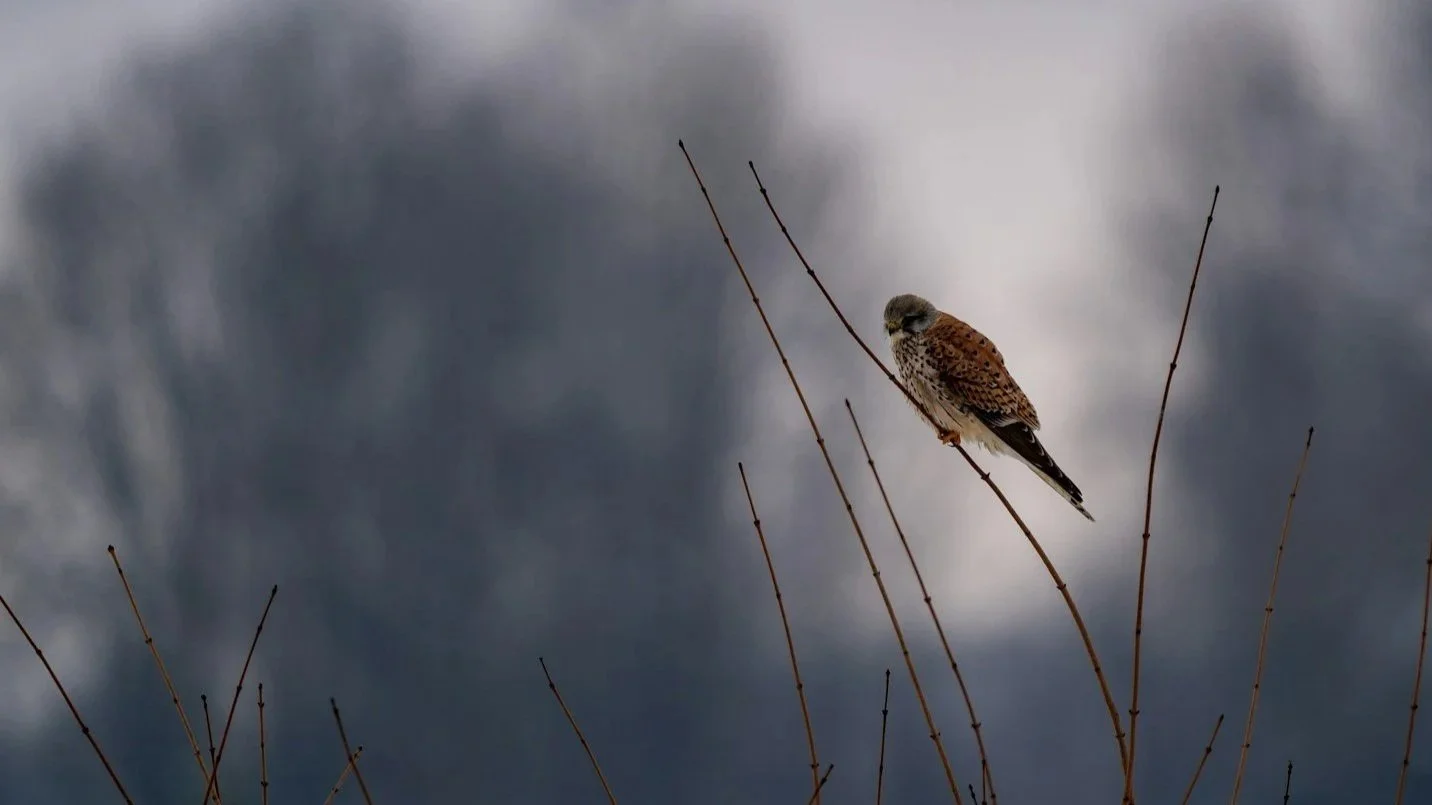
Back home, something else catches my ear—something I don’t recognize at first. Then I realize it’s the call of a kestrel, a falcon I haven’t heard or seen since last spring. The pair must be early this year. I stand still and listen, and it is impossible to feel anything but awe.
We are wired to want things to be predictable. We gravitate toward certainty. But the mind also benefits when we encounter something new—when we notice what we usually overlook.
Disruption, even a disappointing snow season, can shift the lens.
When what we expect disappears, there is room for something else to arise. It is the way we make an empty house a home, filling it with our favorite furniture and loved ones. Without the space to begin with, there is no room for finding meaning in what’s new.
This winter the snow did not come. But the kestrels did, and I had the space to notice.