
Turning Toward
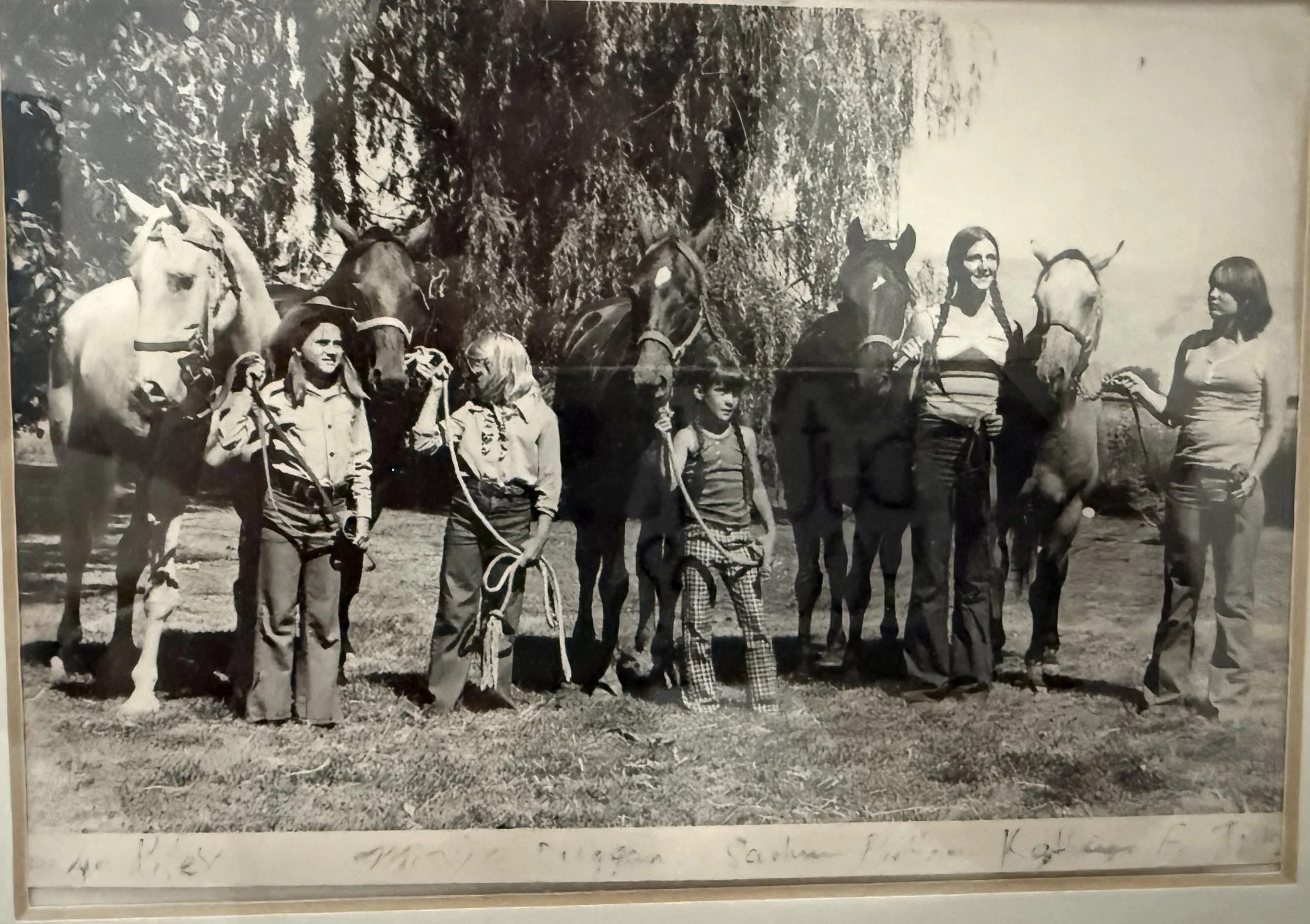
Gaylyn Reilly (with horse Prince), Missy Duggan (with Buddy), me, Sara (with gallant Peanuts), my cousin Kathryn (with Bridget), and Timmy Hinckley (with her gray horse, whose name escapes me).
by Sara Flitner
When I was about 12 years old, I got my first colt from the ranch’s crop of mares. It was a rite of passage for my siblings and me, that when we were old enough to train and care for the animal, we got to choose our “first horse,” the one that we would be paired with for subsequent ranch outings, work or pleasure. We’d choose in the spring and begin our work together in a round corral first with halter, then bridle, finally saddle. It would be months before we’d put foot to stirrup and climb on the horse for the first time.
We were told to build the relationship, to understand the peculiarities of the horse in detail first. I called my filly Banjo, because she walked lightly, like fingers picking strings, and she was playful. If the corral gate opened just wide enough when I put her up, she exploded in, an acrobat with all four hooves in the air. It was important, my dad said, to get to know her whimsies before they might surprise me out in the open.
I wasn’t supposed to be scared to walk behind a horse, especially one learning her cues from me. They could smell fear on you, said our old ranch hand who had a way with horses. “When you’re calm and confident,” he said, “so’s your horse.”
For the first weeks in the corral, Banjo would turn her rump to me, not allowing me to get near her head. I was too embarrassed to tell my dad that I had doubts about her not kicking me. I decided to wait it out, unwilling to get close enough to put my small hand on her large hip and read her mood with my fingers, as if braille letters sat beneath her flank, side ribs, long, elegant neck. I’d just wait, I figured, until she stopped fretting and turned toward the source of anxiety, which was me.
This took days. I coaxed, murmured, purred to little avail. There, there, sweet girl. Come this way, honey. Look here, look here, let’s be friends, we’re going to be good, good friends. Nearly hoarse from all the hours of coaxing, I eventually contented myself with her company and the companionship that grows from quiet. Finally, she turned her glossy sweet neck towards me, flank trembling slightly with soft eyes fixed on mine.
—
When my friend called the other day, the anguish in her voice took on its own identity, a heft that intruded. For years, when a loved one approached me with a problem, I leapt on it like a predator, devouring the entrails of anything that I could make actionable. It felt powerful to be in motion, to take steps that would, I thought, help.
It’s human nature to do the thing we learn over time not to do: we fix, advise, take charge when someone we love is in pain, and it takes a really long time to learn that staring through the corral poles does not unlatch the gate. Nor does thrashing or pulling away from the thing we don’t want to see or feel. In truth, within an hour of Banjo turning toward the source of her anxiety, to me, I had my light hand on her halter and we went out to the green grass for the afternoon.
I was reminded of my sweet filly as I listened to my friend for a long time, knowing she would pour out her frustration, giving syllables and hard consonants to her reality. She talked some more, tears in her voice and on her face, then fell silent. Some time passed, and then she looked toward a spot that held something only she could see, and said, “That’s it. Enough. I know what needs to be done.”
—
Lately, I can’t get out of the post office without conversation about how confusing and confronting life is right now. I’m not saying it’s true or untrue. I’m not saying do nothing in the face of the kid who is struggling, the injustice around you, or the neighbor who suffers. I’m saying that if you start running towards something without any reflection, you’re really just running.
Here’s what to do with discomfort: look right at it. See it directly until you know what you’re looking at. Acting brashly or fast as a way to avoid the pain we feel just means we don’t see the full picture. And we never find the gate.
This photo is still framed in my house: Gaylyn Reilly (with horse Prince), Missy Duggan (with Buddy), me, Sara (with gallant Peanuts), my cousin Kathryn (with Bridget) and Timmy Hinckley (with her gray horse, whose name escapes me).