
The Discipline of the Pause
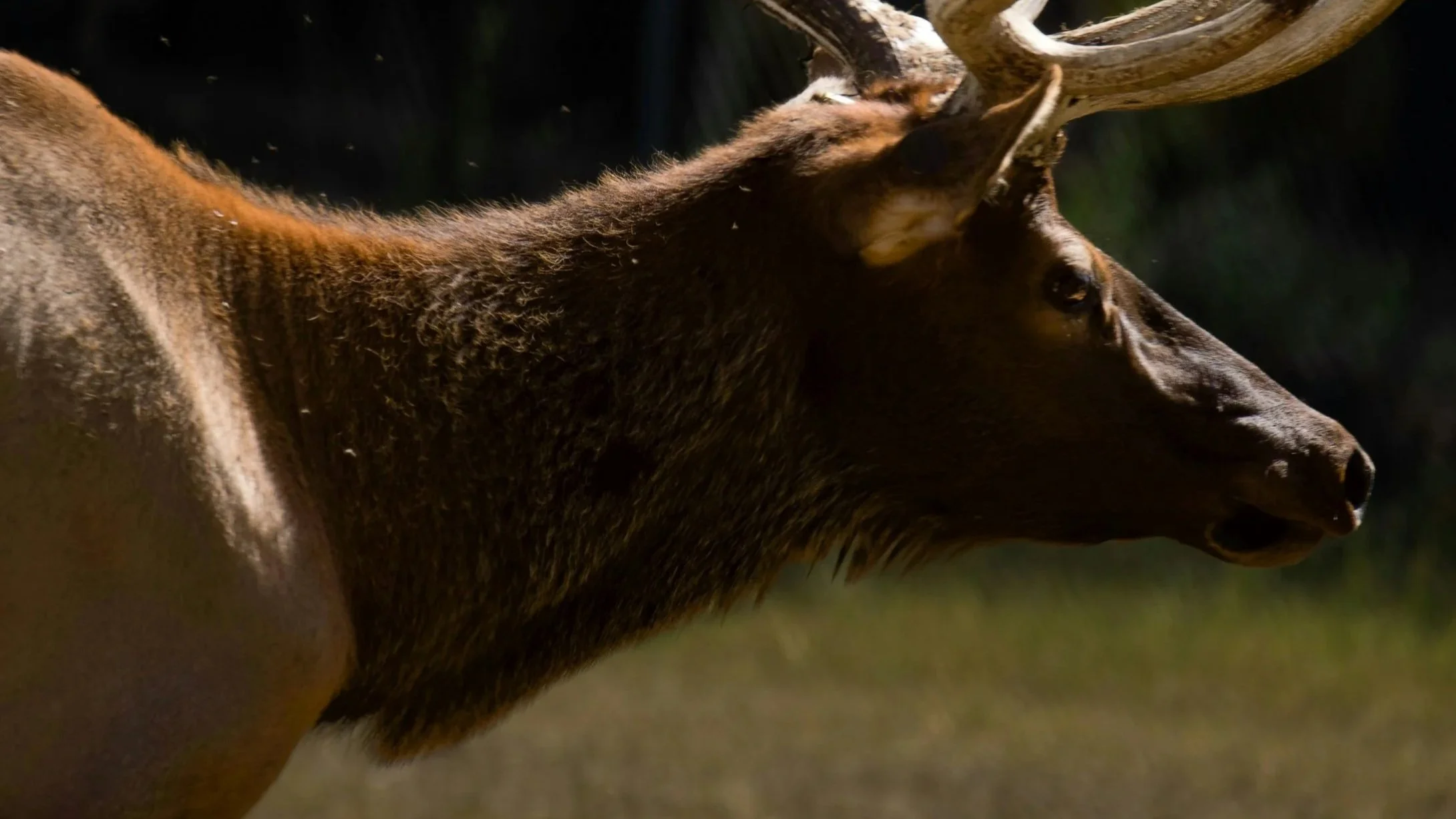
I watch a herd of a hundred or more elk move up the hillside above the Snake River in an undulating rhythm. Their movement makes the hill itself look alive, a kind of living current, and I am awestruck by their collective ambition to do this unthinkable thing—climb steadily toward the skyline.
The mild winter has been generous. Their bodies are fat and strong. Up they go, even in the midday sun.
Then, without warning, the lead animal turns. An abrupt about-face. The entire herd pours back down the hill, reversing direction with the same fluid precision.
Nothing visible has changed. No predator appears. No sound reaches me.
Eventually, they slow. Then stop. Then stand still.
I wait, impatient, wanting them to move again—wanting some explanation that will interpret their behavior neatly.
None comes.
Biologically, humans are not so different from other herd animals. We seek safety in numbers. We take cues from those who appear to see what’s ahead. For most of human history, survival meant belonging to groups small enough for trust and recognition, and large enough for protection.
The human brain is built for this scale. Anthropologists suggest we can maintain meaningful relationships with roughly 150 people, and true trust with far fewer—closer to fifteen.
Modern life, however, asks something very different of us. We are pulled into tribes that number in the millions. We are asked to react, align, and decide at a scale our nervous systems cannot comfortably process.
And so we default.
Us versus them.
Take or be taken.
Win or lose.
In that narrowing, something essential is lost.
Last week, a longtime friend and mentor came to Jackson to spend time with Becoming Jackson Whole, our nonprofit effort to offer science and mindfulness to support community health and better problem-solving. Jim arrived in his signature long white beard, his eyes always full of both mischief and wisdom. He came of age in the 1960s, on college campuses shaped by war and social upheaval not so different from today. He meets complexity with a steady, comprehending gaze. He listens for full answers, and he laughs—a lot.
Over the course of the afternoon, we returned again and again to a simple idea: times of complexity require both patience and exertion.
Rush to the wrong action, jump to the wrong conclusion, and the cost is real. Sometimes it can be repaired. Sometimes the damage—like shattered glass—is not so easily put back together.
We see this even in our own community. Housing advocates might succeed in maximizing units, only to find that overburdened roads delay emergency responders when minutes matter most. One good pursued too quickly can compromise another.
The instinct is to act. To decide. To move.
In nature, expending unnecessary energy is the opposite of progress, and energy wasted is costly. Nature’s timeline is longer than our lives, longer than our news cycles, more critical than our urgency to be right. And the nature of things requires patience in order to choose the best path.
The elk did not charge blindly toward the skyline. Nor did they scatter in panic when something shifted. They stayed together, changed direction, and regrouped. And then they stood still.
Whatever spooked that herd required a temporary retreat to take stock and consider the whole landscape. Then, they resumed their trek safely.
For the elk, safety comes in staying together. A threat—a wolf, a bear—reveals itself clearly. For humans, the threat is often less visible. It looks like us. It unsettles our sense of certainty, our identity, our place. Our brains are not built to make immediate, accurate judgments at this scale—not without cost.
In a herd as large and fractured as ours, the way forward is not always clear, though the first step is simpler than we think.
Pause. Take stock. Remember that others want safety, too. Just like us.